


February 7, 2026
July 18, 2026
Click “Listen Now” to hear the audio version of Insights.
HERE'S MY TAKE
A guest column from Cardus CEO Michael Van Pelt
When you think of the Calgary Stampede, you might picture the rodeo and chuckwagons, the streets filled with cowboy gear, or the obligatory politician pancake flip photo op. But what makes it unlike any other festival in Canada is that it bleeds into every corner of the city. It’s an all-encompassing, immersive experience, no matter where in Calgary you find yourself. At the grocery store, on news channels, and even in the C-suites, you’ll see cowboy boots and plaid. Even deep in the suburbs, people are wearing cowboy hats.
It’s also by far the most successful blend of history, party atmosphere, serious business acumen, and political stakes seen anywhere in the country, offering something for everyone. It's an equal magnet for work and play due to its ability to make real life a little more accessible, relatable, and enjoyable. Deals and partnerships can be sealed in a boardroom, for sure, but aren’t they more fun to hammer out wearing jeans, eating mini donuts, and drinking a beer while watching bucking bulls at 2 in the afternoon on a Tuesday?
Those deals do get wrangled – a lot of them. The Calgary Stampede brings in $540 million in economic value to southern Alberta. This year saw a record $6 million in chuckwagon sponsorships, 1.4 million attendees (a near record), and at least 249 community pancake breakfasts hosted. Relying on 3,000 volunteers, Stampede Park alone hosts more than 1,200 hospitality, tourism, and sporting events.
It’s also a mandatory whirlwind week for politicians; this year Premier Danielle Smith reported having attended 102 events (including one with us) and announced $51.8 billion in investment in the province. Especially when factoring in local population size, Stampede outshines the Toronto’s Canadian National Exhibition (CNE), Edmonton’s K-Days, and Vancouver’s Pacific National Exhibition in both attendance and investment by a long shot. The city simultaneously stops (sometimes literally – all the banks in the city closed on parade day morning because so many police resources are dedicated to the parade) and goes full-tilt for ten full days, and if you don’t join in the Stampede spirit you’re being left behind.
There’s still something romantic and aspirational about our western heritage, and its unifying factor is certainly one aspect. Though we might associate cattle herding and rodeo as rural activities, the Calgary Stampede is the ultimate urban/rural unison – and it happens in the heart of Canada’s third largest city. Away from the big show, around 50 Alberta communities host rodeos or stampedes on “the road to the Stampede”. Small towns can see their populations double or triple on a rodeo weekend. Essentially, all these community based experiences collect into one of the largest and most concentrated rodeo seasons in North America.
While welcoming their rural neighbours downtown, the Stampede also welcomes newcomers to a living Canadian tradition. It is heartening to see many ethnic communities bedecked with cowboy gear – especially in a province where nearly a quarter of its residents were born outside the country. This kind of culture building is authentic, voluntary, and infectious.
There’s a third key to the Stampede’s cultural success: the presence of history and tradition. The Alberta story is embedded within the greatest outdoor show on Earth, including ranching, Indigenous histories, music, food, and much more. Albertans are proud of their past, and at the Stampede it comes through naturally and without arrogance.
In an era when many institutions struggle to create a shared civic identity, the Calgary Stampede reminds us that culture isn't built by government decree or marketing campaigns. It is built through traditions that people genuinely want to participate in, year after year.
The Stampede works because it asks everyone from CEOs to newcomers, ranchers to politicians, lifelong Calgarians to first-time visitors to step into a common story. While bringing history and tradition to life, it turns business, politics, and community into parts of that same celebration.
The Calgary Stampede is more than a successful festival. It's a masterclass in how a region builds identity, welcomes newcomers, and gives people something worth belonging to. Canada could use more institutions like this.
WHAT I’M READING
The Canadian Who Steered Europe Away From the U.S.
The Wall Street Journal wrote an exposé on Mark Carney's work to pivot Canada and Europe away from reliance on the U.S. To quote Former United States Chairman of the Joint Chiefs of Staff, "Amateurs talk strategy. Professionals talk logistics."
Alberta in Canada
Former Deputy MP Sheila Copps recently wrote a heartfelt article for The Hill Times entitled, "The story of Canada needs to be told in Alberta". There is lots to dispute in the article, beginning with the title! A better focus would be on the need for the story of Alberta to be told in the rest of Canada, and I will be making this case later this fall. Copps closes her article this way: "Those of us who love this country need to understand that survival is not guaranteed. If we are not willing to fight hard for the survival of our country, Canada could be lost."
Morality and the Supreme Court
Our colleague Mark Labberton at the Conversing podcast recently published a fascinating interview with American analyst Yuval Levin regarding morality and the US Supreme Court.
The Population Bust is Coming Sooner Than Anyone is Prepared For
Our Senior Fellow Dr. Lyman Stone recently worked with us on a new Canadian fertility study, but he also keeps a keen eye on US fertility. His new op-ed for the New York Times summarizes the growing fertility issue south of the border.
Compassion and End-of-Life Decisions
Ray spoke with Lorna Dueck at the Canadian Bible Society's Scripture Untangled podcast about a Christian theology of end-of-life and dignity of life.
Are you an Elbows Up Canadian?
I have been having a delightful discussion with a friend on the value of our “Elbows Up” rhetoric here in Canada. Mike Myers, the famous Canadian-American actor and comedian, popularized Gordie Howe's signature hockey move (Howe was famous as “Mr. Elbows”) as a protest to an aggressive tariff move on the part of the US.
My friend and I disagree. She argues that “Elbows Up” is a great symbol of Canadian resilience, unity, and self-reliance during trade tensions and cross-border disputes.
Joining my friend on the pro-side are Kimberley Milani and Dusya Vera at the Ian O. Ihnatowycz Institute for Leadership in a really interesting article (which leans heavily on the historic and religious virtues, so sign me up!).
Vera and Milani take the “Elbows up” metaphor to new heights of honour. They state: “The second matters most for those who study business. The same Temperance and resilience that make the country civil and stable can — without Drive — stiffen into caution. “Elbows up” is defensive courage, but a nation can be brave when attacked and strikingly timid when it comes to building, betting, and disrupting…”
I get “Elbows up” as an election campaign message as in “it helps one win by raising one’s hackles”. However, some on the ground observations turn me off from this powerful metaphor. First and most practically, most often elbows up in real hockey game gets you a penalty. Second, as I travel Canada I hear “elbows up” associated with a growing anti-Americanism. This is not new but the trend is troublesome. The depth of our relationship with the United States goes far beyond trade and the politics and the US President. We are brought together through deep familial, religious, commerce (I mean real human business relationships), social, and cultural friendships and partnerships. This is the power of our North American geography and history!
For now, my advice: stick to our guns at the negotiating table. Contrast the bravado with our politeness, get our house in order, and know a good deal when its in front of your face. I would say that Canada has been on the “winning side” of our bargain with the United States already since confederation. We can keep this win going if we keep “elbows up” metaphors in the locker room and off the ice. Love to hear your thoughts on this!
MEANINGFUL METRICS
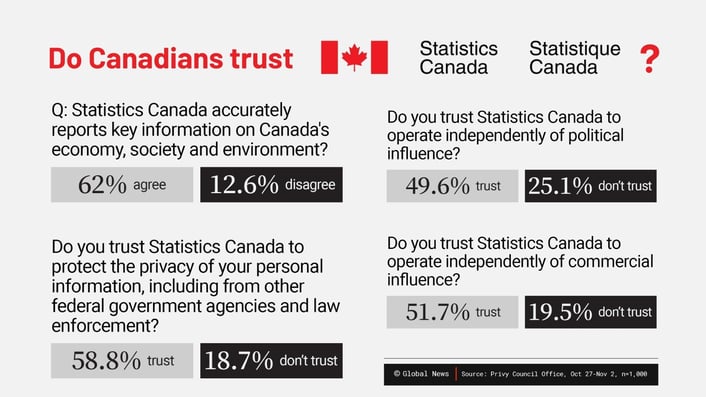
Trusting the Numbers
Global News obtained the results of an internal Statistics Canada survey of Canadians, which asked whether Canadians trust their national statistics agency.
Of note, 62 percent of Canadians believe Statistics Canada information is accurate, and just shy of 50 percent believe Statistics Canada operates independently of political influence. It's worth noting there's a base level of distrust which would apply to any government agency, so we don't know which respondents are skeptical of all government versus StatsCan specifically.
While we don't know the full reason the agency commissioned the poll, it's important that they asked these questions as it shows they care about the issue of government trust. Kudos.
TAKE IT TO-GO
Clarity in Hazy Days
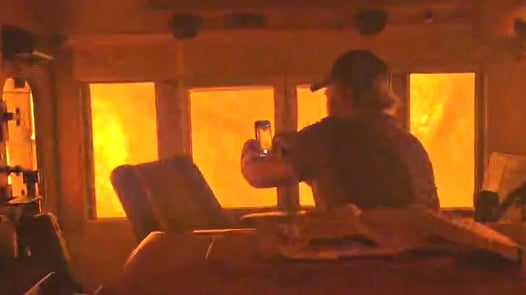
Hundreds of wildfires are raging in Northern Ontario and Minnesota, with thousands displaced, whole communities engulfed in flame, and smoke blanketing us in southern Ontario.
It is in times like these where we look to our government for leadership and action. While it is always good to see supportive tweets and pledges of action from our political leaders, the real tangible response to the fire will be the responsibility of our first responders: firefighters, police, paramedics, and others working to save lives and homes.
In 1 Timothy 2, Paul urges us that "petitions, prayers, intercession and thanksgiving be made for all people — for kings and all those in authority, that we may live peaceful and quiet lives in all godliness and holiness." Our first responders are part of the good of government, and their service to us — at all times — contributes to a flourishing society. Please keep them in your prayers during these challenging times.


Reply to Ray